

About the work:
“What do we remember? What do we want to forget?”
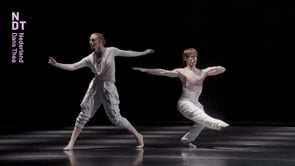
Kylián’s magnificent farewell piece Mémoires d’Oubliettes (2009), was the last work he created for NDT 1. With nostalgic sounds and whispers, this compelling work references Kylián’s signature style and poetic language, full of elusive emotions. It explores the nature of memory—what is forgotten, what remains, and how time influences our perception of reality. Performing this cherished piece again after all these years is a meaningful moment for us as a company.
It is a gift we hope you’ll enjoy as much as we will.


Surimu Fukushi about Mémoires d’Oubliettes:
“I’m happy to dance a role originally created with Kenta Kojiri. Watching him perform when I was a ballet student sparked my interest in contemporary dance, so this opportunity feels especially meaningful.
I find it both interesting and challenging to move through memories while being present in the moment. There are memories of choreography, rehearsals, physical memories held in my body, and experiences from my entire life.
These can create anticipation and sometimes even lead me into imagined futures.
At the same time, there’s the present moment — body sensations, my dance partner, sound, space, imagery, and the presence of a live audience.
I’m looking forward to experiencing all of this and sharing these slices of time with you.”
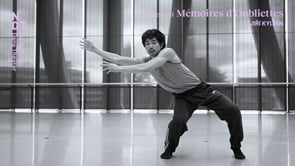

Sophie Whittome about Mémoires d’Oubliettes:
“During the process of learning and interpreting this work, I have thought primarily of time.
This work, to me, is physical poetry. It uses the language of the subconscious to rummage through old and unborn remembrances. In response, I cannot provide anything definitive, but can only unearth several questions and hunches:
I think it is the human condition to oscillate between forgetting and remembering the brutal and clean nature of time.
Time moves quietly and obliterates that which is in her wake. Our small efforts can change the rate at which this occurs, but she is the steady, equalising winner. We rage and fury and sing and love in the face of this fact.
We are sometimes aware of this fact and sometimes we are not.
We are sometimes freed by this fact and sometimes we are not.
In our efforts to remember and be remembered— carve marks into earth, make noise while we can, hone our crafts— are we valiant or pitiful? Both?”